
Cover Image: Lilly Guilbeault, March 2026
By: Flore Devernay, Contributing Writer
We’ve all had to endure the excruciatingly painful task of “small talk” that occurs in casual conversation. Don’t be fooled! The talk may be small but it by no means is an easy task… mentally at least. Thankfully, there is a way to make these discussions more interesting: numbers! If you keep reading, you might just find a new favorite number, the perfect weapon against dull conversation. These articles are ranked from least complex to most complex, depending on your interest level.
Here is my personal favorite: a real, whole, even number. It isn’t associated with one specific area of math, but is instead connected to many different fields through its many following properties:
1. It is the smallest perfect number. A perfect number is a number that is equal to the sum of its positive proper divisors. 6 is divisible by 1, 2, 3, and 1×2×3= 6. This also makes it the result of a factorial. A factorial of a whole number k, noted “k!” is found by multiplying k by all of the integers below it until 1. So 3!=3×2×1=6.
2. Moreover, 6 is the only number that is both perfect and triangular, triangular meaning you can place 6 points into an equilateral triangle.
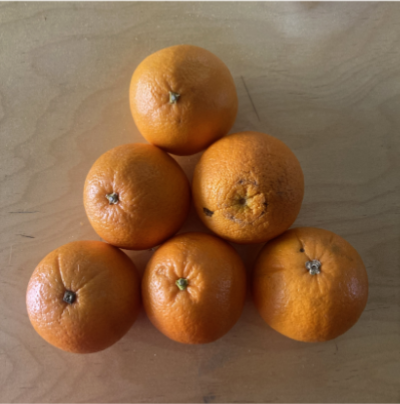
Any triangular number is called so because you can get that number by adding 1+2+…n. This makes sense visually because making a triangle with points consists in having one on top, 2 under it, 3 below these two, etc.
3. It is the size of the smallest non-abelian group. A non-abelian group refers to any system where order of operations matter. For example, if you turn the right side of a Rubik’s cube, then the top side, you would get a different pattern than by doing it the other way. Here, the operations of turning the right side of a Rubik’s cube and turning the top side are called elements. Turns out, for the order of operations to matter, there needs to
be at least 6 possible operations. One less, and the same combination of operations in any order gives the same result.
4. 6’s geometry
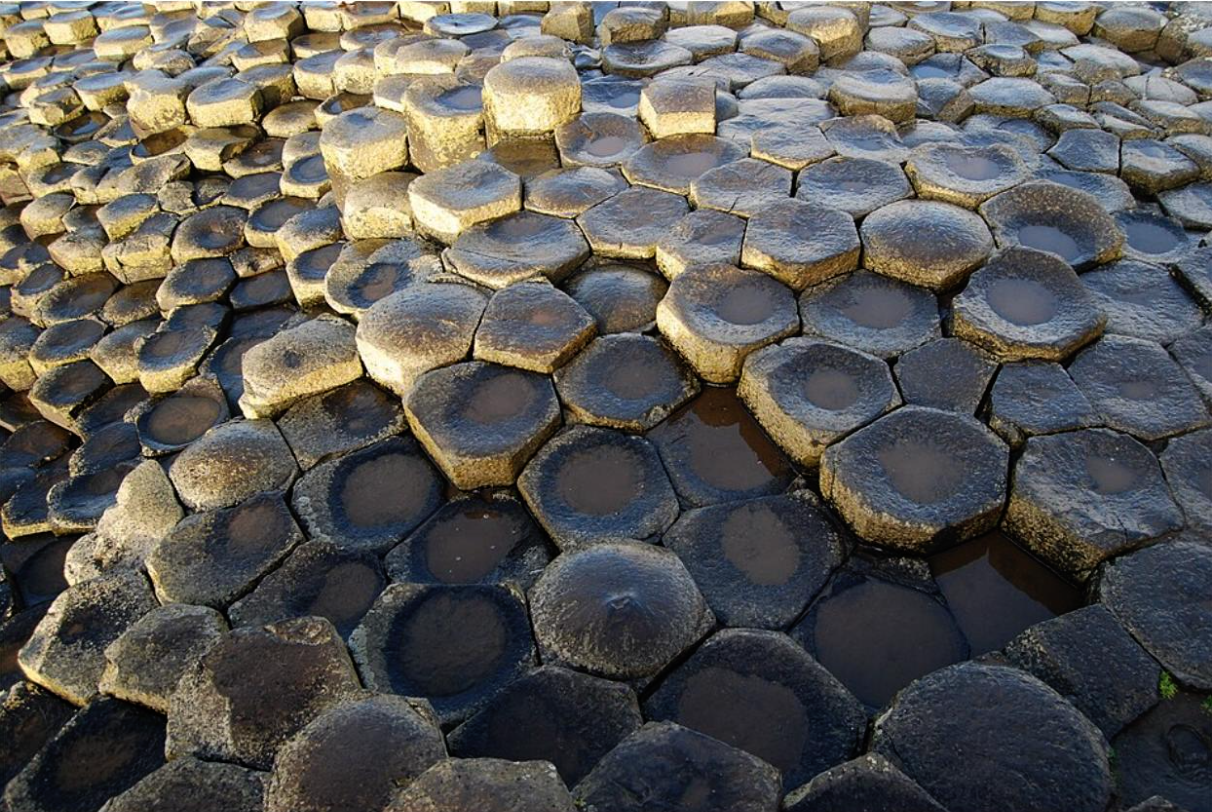
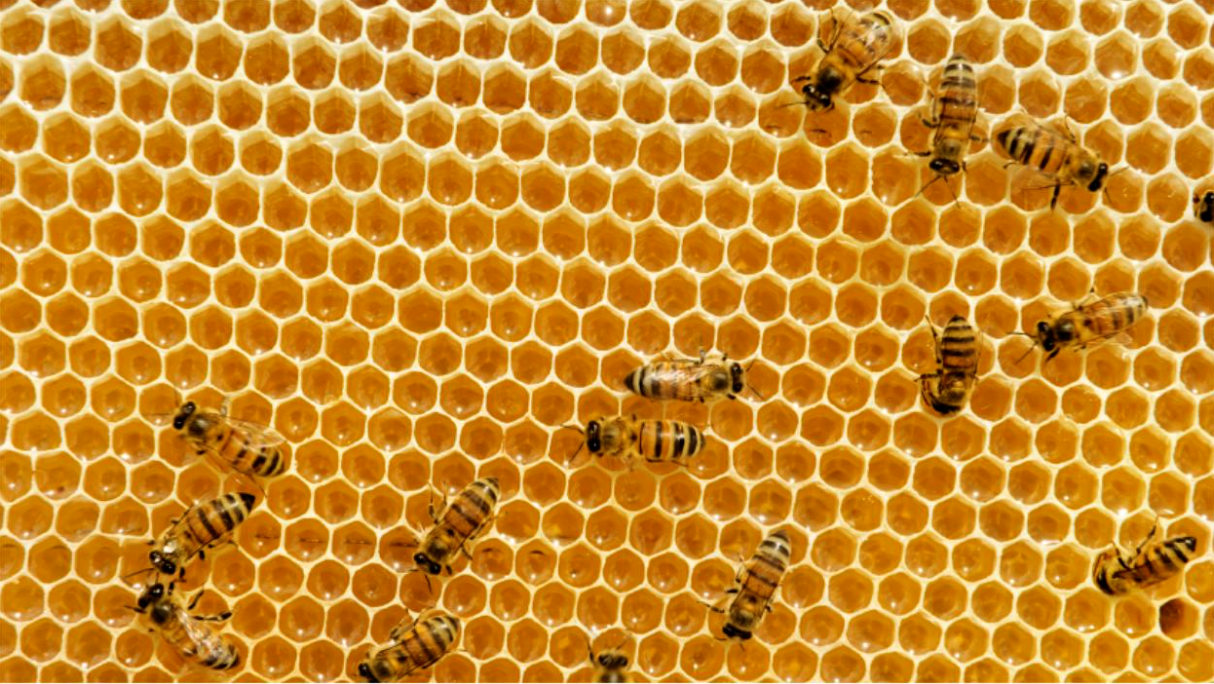
As I said before, 6 has many divisors for such a small number (1, 2, 3, 6). This makes it highly practical, because it is easy to “fraction” it. That is why we have 60 seconds in a minute, and 60 minutes in an hour. You might think it would be easier to have 100 minutes in one hour, but 100 actually 3 divisors less than 60. It is much cleaner to have ⅓ of an hour being 20 minutes, and not 33.33333 minutes. This expands to geometry, especially with circles. Circles have 360 degrees, which is 60×60, thus even more divisible. It makes it very practical to divide a circle into halves, thirds, quarters, fifths, sixths, eighths, ninths, tenths, twelfths, fifteenths, twentieths (now try saying this sentence aloud). Fractioning a circle into six equal parts, and then connecting these points to each other along the edge gets you a hexagon: a shape of six equal sides. These are extremely prevalent in nature, because of their efficiency. The angle between two sides of a hexagon is 120 degrees, meaning three hexagons together fit perfectly (120 + 120 + 120 = 360 degrees). Moreover, a hexagonal structure encloses maximum surface area for a minimum perimeter (this reminds me of the fractals article, which you should check out). This is why honeycombs are made of hexagons, as it allows bees to store as much honey as possible without having to produce much wax.
5. Six also holds cultural significance, by being a lucky number in Chinese culture, the number of realms of existence a person can be reborn into in Buddhism, and the number of feet a casket is buried under.

 The Abstract