
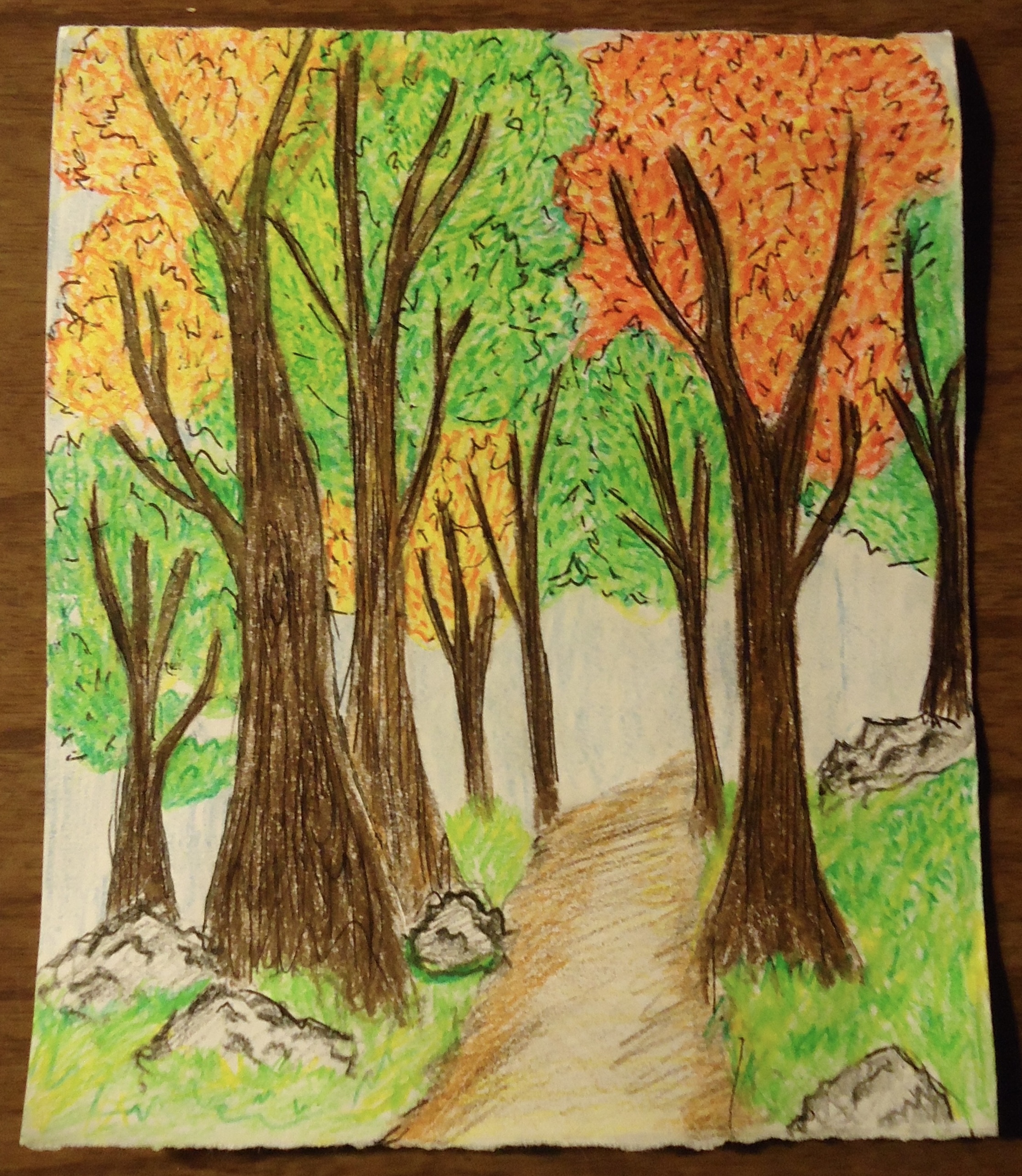
Cover Image: Aura Datta, January 2026
By: Quinnlyn Boyle, Contributing Writer
Within walking distance from McGill’s MacDonald campus lies a hidden gem, the Morgan Arboretum. McGill acquired this land from the Morgan family in 1945 and transformed it into a beautiful, forested reserve.
The Arboretum is full of a wide variety of tree species — old, young, native, and exotic. These stately trees are looked after by a handful of arboretum staff and volunteers who keep the sanctuary accessible and navigable. One of their biggest challenges is invasive species, such as the buckthorn, a plant you will no doubt see around as you stroll through the grounds.
This past year, the arboretum celebrated its eighty-year anniversary with a day full of festivities. There were guided tours, snacks, drinks, and music. This celebration drew in a diverse crowd of families, students, and local community members, united by their love of nature and passion for learning.
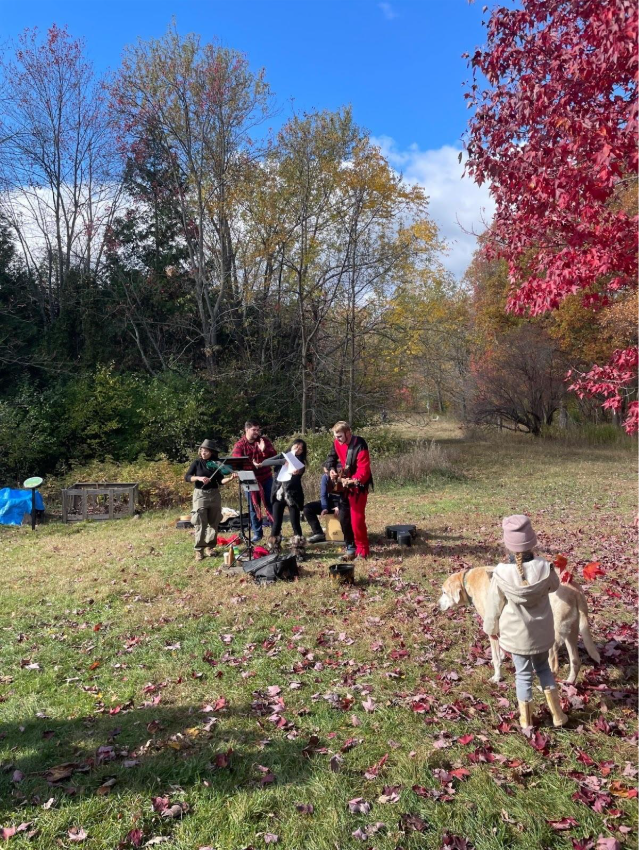
Ryan Young, Vice President of Friends of the Morgan Arboretum, led nature walks throughout the day. Young discussed the various tree species within the Arboretum, acknowledging their origins and unique properties. Most trees in the Arboretum are native to the area. However, some plots contain trees that were imported from elsewhere.
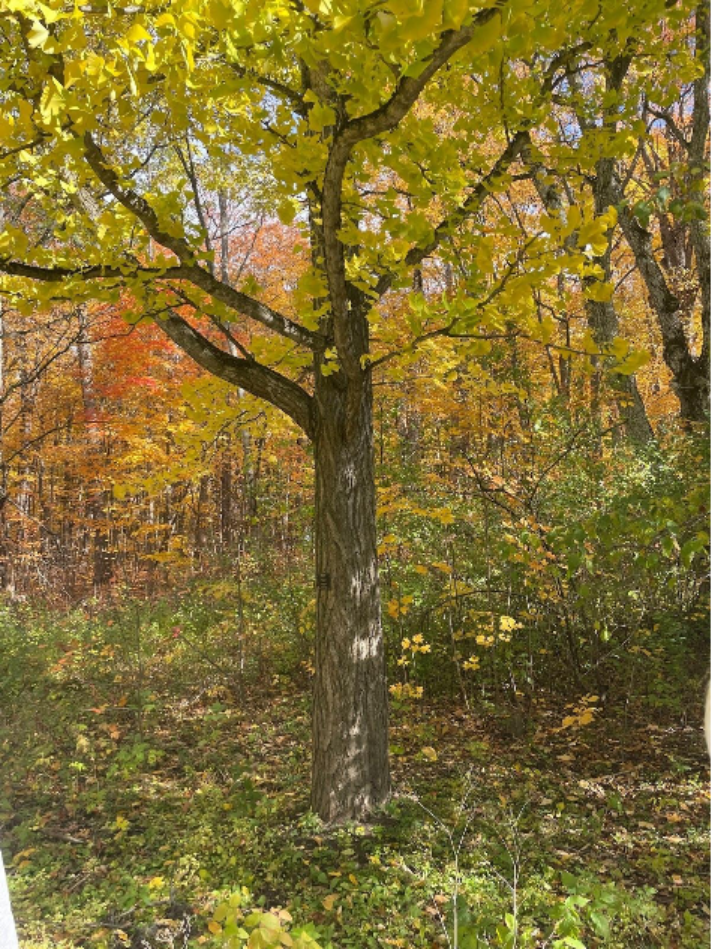
The Ginkgo biloba tree, for example, was imported from China, yet it thrives in the arboretum. This species is referred to as a “fossil tree” because Ginkgo fossils have been found dating back over 200 million years, meaning dinosaurs could have walked by this same tree species (1)! Ginkgo bilboas are recognizable by their distinct unpleasant smell. The yellow ginkgo seeds are coated in butyric acid, a chemical also found in vomit (2). However, despite the unappetizing odor, the kernels within the ginkgo seeds can be quite tasty if prepared correctly and safely.
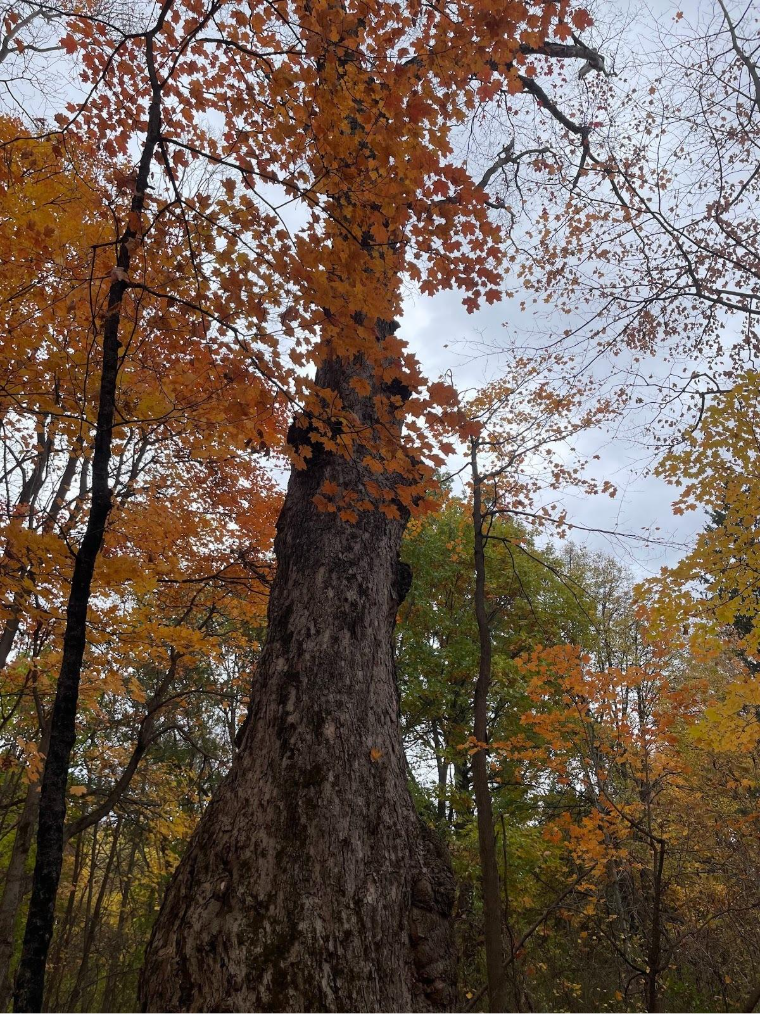
The tree species in the arboretum are not only diverse in terms of origin, but also in terms of age. Even though the arboretum was established only eighty years ago, the land was never fully cleared for agriculture, so some trees within the arboretum have been standing for quite some time.
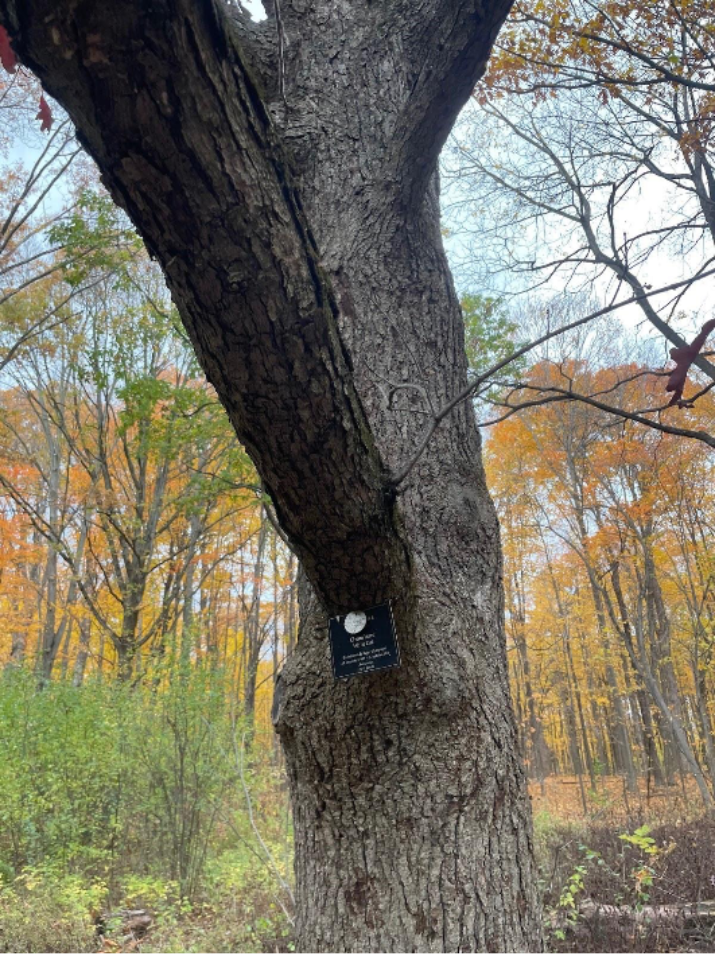
The sugar maple tree pictured below is at least two hundred years old, according to Young. Sugar maples are a prevalent species in the Arboretum mainly due to their impressive ability to outcompete other species. They quickly shoot up whenever a gap in the canopy is available, blocking other trees from receiving this available sunlight. Their most valuable trait however, especially for those with a sweet tooth, is their ability to produce a Canadian delicacy: maple syrup.
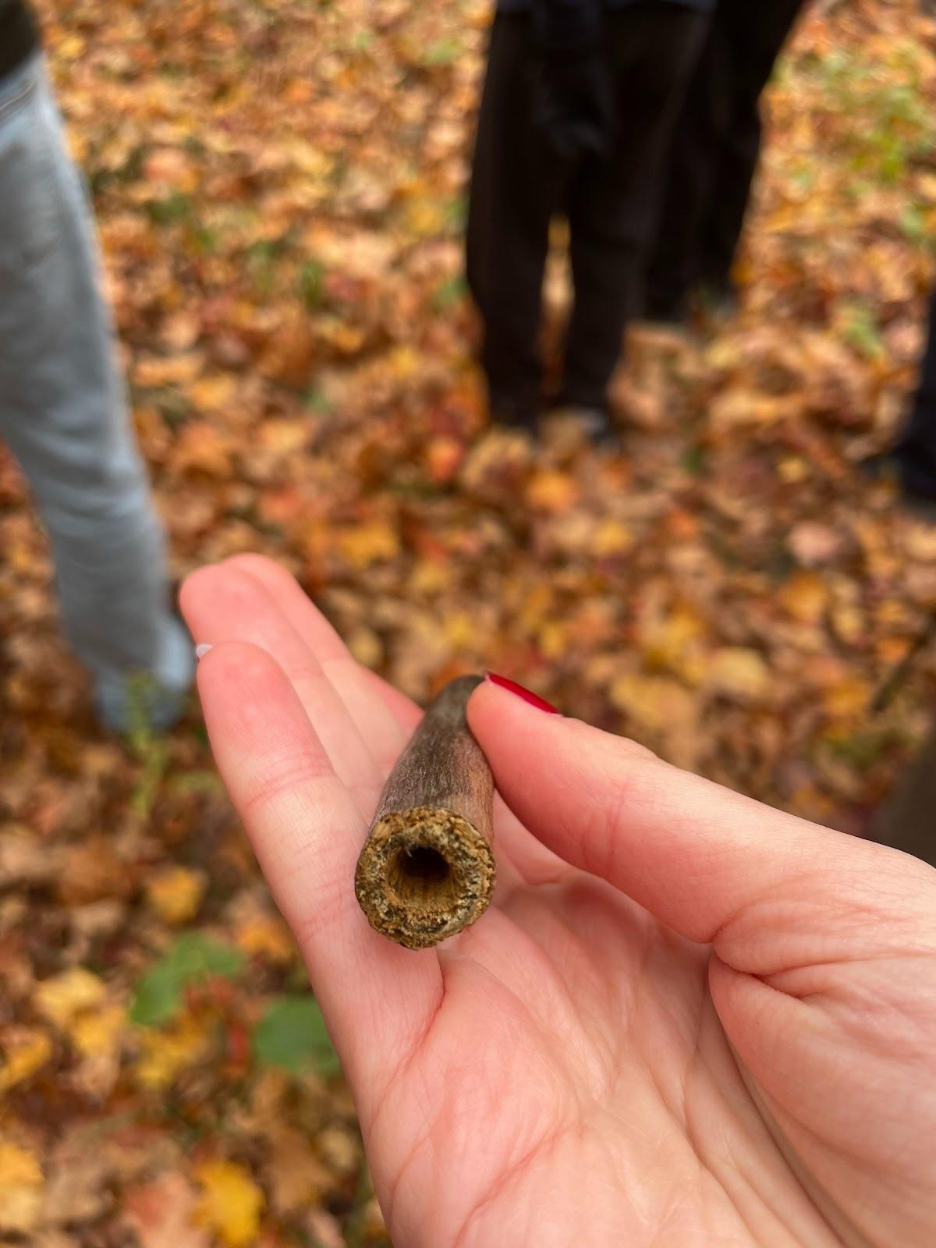
Maple syrup is collected from these trees through a tap inserted into the bark. Prior to industrialization, Indigenous communities would fashion a tap out of a sumac branch by hollowing out the middle and whittling one end into a cone-like shape, as pictured below. As temperatures rise during the day, the wood expands, subjecting the sap to pressure which forces it out of the taps (3). Once the sap is collected, it is boiled down, making the syrupy consistency, color, and flavor we know and love. On average, it takes about forty litres of sap to make one litre of maple syrup, depending on the sap sugar content (3).
Another common species in the arboretum is the oak tree. There are both red and white oaks, which are distinguishable by the shape of their leaves. White oaks have leaves with rounded lobes, while red oak leaves are pointy. White oaks are also a squirrel favorite. The red oak acorns are more bitter, and thus squirrels prefer snacking on white oak acorns.
Although oak forests are beautiful, maple forests are still more favorable in terms of benefit to the entire ecosystem. Oak leaves decompose slowly, making it more difficult for earthworms and organisms to break down the soil. Maple leaves, however, break down much quicker, providing the soil with more nutrients and generating an overall more fertile forest.
The arboretum is home to so many more fascinating trees with deep histories. To discover all it has to offer, guided tours are available, along with an information booklet allowing visitors to complete a self-guided tour. Self-guided Tour
While there are many beautiful trees to be seen as you meander through the Arboreum, you are bound to encounter some Buckthorn as well. This invasive species has been an issue in the arboretum for a long time. Buckthorn grows rapidly, outcompeting other native species and reducing biodiversity (4). To avoid this, it must be weeded out at regular intervals.
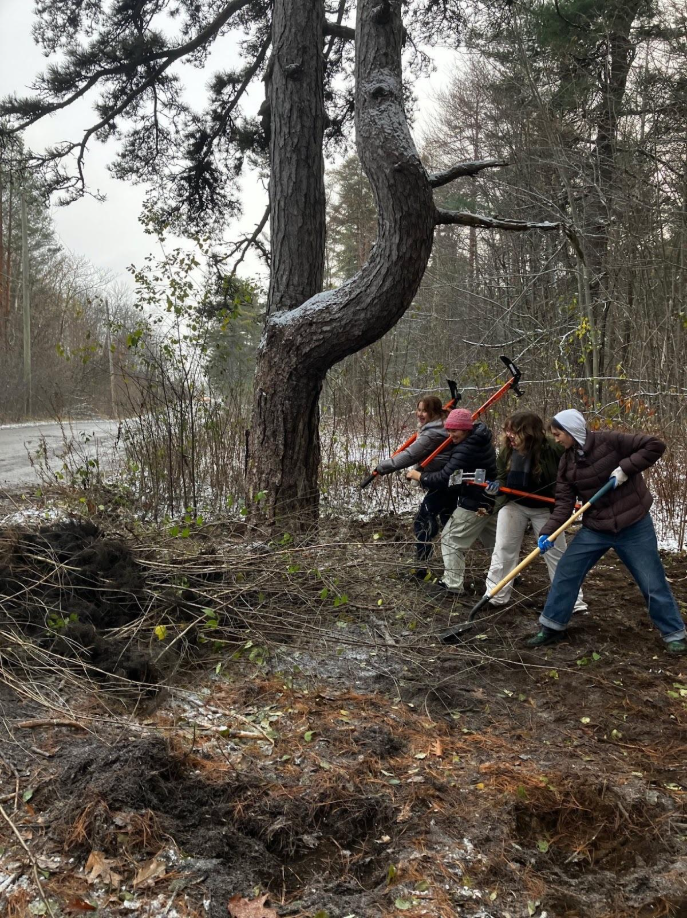
Little Forests McGill organized a trip to the arboretum recently to help weed out the Buckthorn. This student-run club is dedicated to protecting and enhancing nature at McGill and in the greater Montreal area (5).
Madeline Heffernan, the Little Forests Macdonald Campus Representative, recapped the club’s trip to the arboretum: “We found it incredibly cumbersome to remove, and if even one cell is left in the ground, buckthorn can reestablish itself. With that said, we helped clear a large portion of buckthorn in our designated area in a couple of hours.”
Another group of McGill students have taken a different approach to tackling the bothersome buckthorn. Students in McGill’s Environment 401 course are introducing goats to isolated areas of the arboretum in hopes that they devour the buckthorn (6).
The Arboretum itself has also hosted volunteer days where community members can come to help remove this invasive species. The combat against Buckthorn in the Morgan Arboretum began years ago and will continue in the coming years.
In addition to buckthorn removal, the Morgan Arboretum offers a variety of other volunteer opportunities, ranging from maintenance and outreach to education (7). To become a volunteer, contact: scott.pemberton@mcgill.ca.
Whether by volunteering or simply strolling down the trails, a visit to the Morgan Arboretum is the perfect way to get outside this winter semester. With student support, the arboretum will continue to thrive as it has for the past eighty years.
References
- Vincent, Gilles. Ginkgo biloba, a remarkable tree for several reasons! (2025, March 17). The Garden of Canada. https://jardincanadensisgarden.ca/ginkgo-biloba-a-remarkable-tree-for-several-reasons-2/#:~:text=There%20is%20no%20doubt%20that,of%20Ginkgo%20is%20beyond%20doubt.
- Friedman, Ned. Stop and Smell the Ginkgoes. (2025, October 24). Arnold Arboretum. https://arboretum.harvard.edu/stories/stop-and-smell-the-ginkgoes/
- Step-by-Step in the Production of Maple Syrup. Producteurs et productrices acéricoles du Québec. https://ppaq.ca/en/maple-production/step-by-step-production-maple-syrup/
- Identifying Common Buckthorn and Understanding Its Impact on Ecosystems (2025, May 2). The North American Invasive Species Management Association. https://naisma.org/2025/05/02/identifying-common-buckthorn-and-understanding-its-impact-on-ecosystems/
- Little Forests McGill. (2024). https://littleforests.wixsite.com/mcgill
- Everett, Austin. Goats vs. Buckthorn: Students Explore Nature’s Lawn Mowers. (2025, November 26). Biebler School of Environment – McGill. https://www.mcgill.ca/environment/article/goats-vs-buckthorn-students-explore-natures-lawn-mowers
- Volunteering. Morgan Arboretum. https://www.mcgill.ca/morganarboretum/get-involved/volunteering

 The Abstract