

Future scientists could spray tiny particles into the atmosphere with airplanes. This technique, called stratospheric aerosol injection, would likely cause cooler weather worldwide by blocking the Sun’s heat from coming to the Earth. While these aerosols could play a big part in fighting climate change, researchers raise questions about their unwanted and unknown effects and the need for global cooperation.
Cover Image: Digital art by Minh Anh Nguyen, February 2026
By: Lauren Millar, Contributing Writer
New research shows that geoengineering is more promising than ever before in stopping global warming
If the average person could control the weather, they would probably choose to have clear sunny skies every day. Surprisingly, scientists have been exploring the opposite idea — trying to create more clouds. Well, kind of.
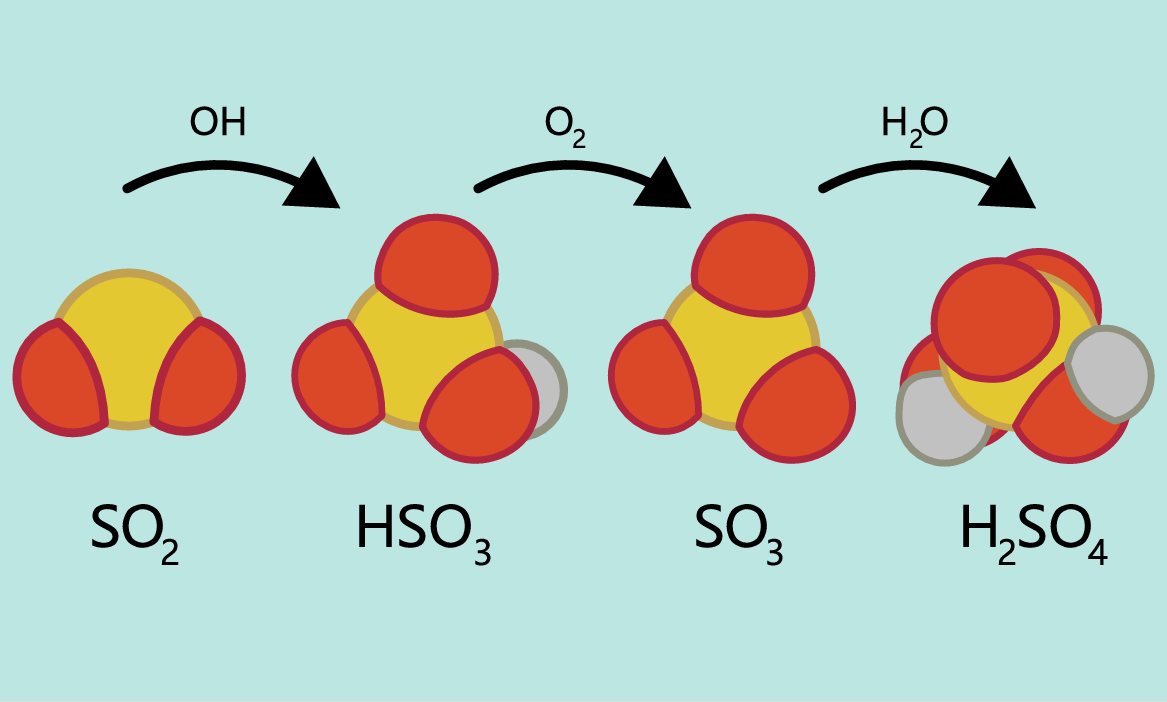
Recently, scientists took a deeper look into an innovative (and controversial) climate control strategy known as stratospheric aerosol injection. (1) The method involves creating cloud-like masses by spraying sulfur dioxide into a high layer of the atmosphere called the stratosphere, in the hopes of lowering near-future global temperatures. When scientists release the sulfur dioxide into the atmosphere, it reacts with hydroxyl, then oxygen, and finally water to create sulfuric acid. This sulfuric acid acts like a mirror, causing infrared radiation waves from the Sun to bounce back into space instead of hitting and warming the Earth’s surface. (2)
While the method has yet to be physically tested on a realistic scale, the researchers were able to forecast its effects using computer models. (3) They found that stratospheric aerosol injection is very likely to quickly cause cooler weather around the world — a welcome result in today’s frantic race to stop climate change. In turn, it would help reduce consequential effects of climate change, such as extreme weather and ecological devastation. (1)
Although this science is promising, it’s not all sunshine and rainbows. A 2022 study warns that stratospheric aerosol injection may have unwanted effects, endangering humans and animals alike. One potential consequence is that the chemically reacting sulfur dioxide could interfere with the reactions that create and destroy ozone, affecting ozone concentrations in different levels of the atmosphere. Specifically, it could increase the amount of ozone closer to the Earth, where it is a pollutant dangerous to human health. At the same time, it could decrease the amount of ozone at higher altitudes, worsening the ozone hole and exposing us to UV rays. (4)
The potential consequences of stratospheric aerosol injection extend to wildlife too. For example, it could increase the amount of carbon dioxide dissolved in the ocean, which is dangerous for hard-shelled marine creatures. (4) This is because they need carbonate ions from the ocean to make their shells, but carbon dioxide acidifies the ocean, causing the carbonate ions to break apart. (5) This destroys the creatures’ shells and leaves them unable to make new ones. (6)
More generally, geoengineering—physically changing the Earth to prevent climate change—comes with a whole host of its own issues too. To start, as geoengineering techniques cannot be tested without permanently altering the atmosphere, scientists must rely on computer models. (7) Making matters worse, the Earth is difficult to model correctly because of complex interactions between the atmosphere, oceans, and sunlight. So, while models can forecast the possible effects of geoengineering, they cannot make confident predictions.
Additionally, policy analysts warn that it is geopolitically complex. Considering that countries contribute to and are affected by climate change differently, it is hard to determine who should be responsible for geoengineering and how it should be done. As geoengineering seeks to alter the entire Earth’s climate system, a geoengineering program employed by one country has the potential to cause adverse effects, such as monsoons, for other uninvolved and unconsenting countries. (8)
Due to these challenges, governments and scientists have not implemented geoengineering strategies yet. In fact, current international agreements outlaw it altogether until better research is done. (9) However, this study could propel stratospheric aerosol injection into action because it models something new.
While computer modelling has been around for a while, the specific model used in the study was able to do some things previous models could not. Most notably, all previous stratospheric aerosol injection models focused on long-term impacts, while this one forecasted short-term impacts. It was also able to generate more accurate projections, as it used less ideal conditions and more realistic interactions between different components of the Earth than earlier models. This improved accuracy and narrower focus of the study allowed it to hammer in the conclusions that stratospheric aerosol injection could allow us to meet temperature targets, stop sea ice loss, and lessen heat waves. (1)
With scant climate action and global temperatures soaring close to a dangerous threshold, climate solutions like stratospheric aerosol injection have never been more important. (10) Armed with the new knowledge from this study, we could create these sulfur ‘clouds’ and live in a world with cooler weather, better biodiversity, and less natural disasters. (11) It is now up to scientists, policymakers and passionate citizens to decide whether we are confident enough in these benefits to risk geopolitical tensions, adverse impacts on wildlife and danger to human health. There is hope for us to solve the climate crisis if we are willing to invest in the scientific research that can turns these plausible solutions into employable tactics.
References
- Hueholt, D. M., Barnes, E. A., Hurrell, J. W., Richter, J. H., & Sun, L. (2023). Assessing Outcomes in Stratospheric Aerosol Injection Scenarios Shortly After Deployment. Earth’s Future, 11(5). https://doi.org/10.1029/2023ef003488
- Kremser, S., Thomason, L. W., von Hobe, M., Hermann, M., Deshler, T., Timmreck, C., Toohey, M., Stenke, A., Schwarz, J. P., Weigel, R., Fueglistaler, S., Prata, F. J., Vernier, J.-P., Schlager, H., Barnes, J. E., Antuña-Marrero, J.-C., Fairlie, D., Palm, M., Mahieu, E., … Meland, B. (2016). Stratospheric aerosol-observations, processes, and impact on climate. Reviews of Geophysics, 54(2), 278–335. https://doi.org/10.1002/2015rg000511
- Preston, C. J. (2017). Carbon emissions, stratospheric aerosol injection, and unintended harms. Ethics & International Affairs, 31(4), 479–493. https://doi.org/10.1017/s0892679417000466
- Tracy, S. M., Moch, J. M., Eastham, S. D., & Buonocore, J. J. (2022). Stratospheric aerosol injection may impact global systems and human health outcomes. Elementa: Science of the Anthropocene, 10(1). https://doi.org/10.1525/elementa.2022.00047
- Zeebe, R. E. (2012). History of seawater carbonate chemistry, atmospheric CO2, and ocean acidification. Annual Review of Earth and Planetary Sciences, 40(1), 141–165. https://doi.org/10.1146/annurev-earth-042711-105521
- Kroeker, K. J., Kordas, R. L., Crim, R., Hendriks, I. E., Ramajo, L., Singh, G. S., Duarte, C. M., & Gattuso, J. (2013). Impacts of ocean acidification on marine organisms: Quantifying sensitivities and interaction with warming. Global Change Biology, 19(6), 1884–1896. https://doi.org/10.1111/gcb.12179
- Robock, A., Bunzl, M., Kravitz, B., & Stenchikov, G. L. (2010). A test for geoengineering? Science, 327(5965), 530–531. https://doi.org/10.1126/science.1186237
- UNESCO. (2023). (rep.). Report of the World Commission on the Ethics of Scientific Knowledge and Technology (COMEST) on the Ethics of Climate Engineering. Retrieved September 26, 2025, from https://unesdoc.unesco.org/ark:/48223/pf0000386677.
- Church, M. (2025, March 5). Geoengineering Governance: Restrictive Framework Must Be Upheld and Strengthened. Center for International Environmental Law. https://www.ciel.org/govern-geoengineering/
- Matthews, H. D., & Wynes, S. (2022). Current global efforts are insufficient to limit warming to 1.5°C. Science, 376(6600), 1404–1409. https://doi.org/10.1126/science.abo3378
- Pörtner, H.-O., D.C. Roberts, H. Adams, I. Adelekan, C. Adler, R. Adrian, P. Aldunce, E. Ali, R. Ara Begum, B. Bednar-Friedl, R. Bezner Kerr, R. Biesbroek, J. Birkmann, K. Bowen, M.A. Caretta, J. Carnicer, E. Castellanos, T.S. Cheong, W. Chow, G. Cissé, S. Clayton, A. Constable, S.R. Cooley, M.J. Costello, M. Craig, W. Cramer, R. Dawson, D. Dodman, J. Efitre, M. Garschagen, E.A. Gilmore, B.C. Glavovic, D. Gutzler, M. Haasnoot, S. Harper, T. Hasegawa, B. Hayward, J.A. Hicke, Y. Hirabayashi, C. Huang, K. Kalaba, W. Kiessling, A. Kitoh, R. Lasco, J. Lawrence, M.F. Lemos, R. Lempert, C. Lennard, D. Ley, T. Lissner, Q. Liu, E. Liwenga, S. Lluch-Cota, S. Löschke, S. Lucatello, Y. Luo, B. Mackey, K. Mintenbeck, A. Mirzabaev, V. Möller, M. Moncassim Vale, M.D. Morecroft, L. Mortsch, A. Mukherji, T. Mustonen, M. Mycoo, J. Nalau, M. New, A. Okem, J.P. Ometto, B. O’Neill, R. Pandey, C. Parmesan, M. Pelling, P.F. Pinho, J. Pinnegar, E.S. Poloczanska, A. Prakash, B. Preston, M.-F. Racault, D. Reckien, A. Revi, S.K. Rose, E.L.F. Schipper, D.N. Schmidt, D. Schoeman, R. Shaw, N.P. Simpson, C. Singh, W. Solecki, L. Stringer, E. Totin, C.H. Trisos, Y. Trisurat, M. van Aalst, D. Viner, M. Wairiu, R. Warren, P. Wester, D. Wrathall, and Z. Zaiton Ibrahim, 2022: Technical Summary. [H.-O. Pörtner, D.C. Roberts, E.S. Poloczanska, K. Mintenbeck, M. Tignor, A. Alegría, M. Craig, S. Langsdorf, S. Löschke, V. Möller, A. Okem (eds.)]. In: Climate Change 2022: Impacts, Adaptation and Vulnerability. Contribution of Working Group II to the Sixth Assessment Report of the Intergovernmental Panel on Climate Change [H.-O. Pörtner, D.C. Roberts, M. Tignor, E.S. Poloczanska, K. Mintenbeck, A. Alegría, M. Craig, S. Langsdorf, S. Löschke, V. Möller, A. Okem, B. Rama (eds.)]. Cambridge University Press, Cambridge, UK and New York, NY, USA, pp. 37–118, doi:10.1017/9781009325844.002.

 The Abstract