

MSURJ Is proud to publish its 20th volume and celebrate on launch day on April 8th, 2025. Read on to learn about some authors and their research they have published in this years volume, and come to launch tomorrow at 6 PM!
- Conflicts with de Sitter Vacua in Supersymmetric Field Theories
- Asymetry of Pain-Induced Facial Grimmacing
- Assessment of Heart Laterality Defects in Zebrafish to Study Variants of Uncertain Significance in Primary Ciliary
- Neural Complexity and Prognosis: Predicting Recovery in Pediatric Epilepsy using Electroencephalography Markers
- Chromosomal Instability (CIN) and CIN-induced Inflammatory Signalling in Human Lymphoma Cells
Conflicts with de Sitter Vacua in Supersymmetric Field Theories
Author: Jeffrey Morais, Department of Physics, McGill University
Can you provide a brief summary of the work you submitted to MSURJ and its importance?
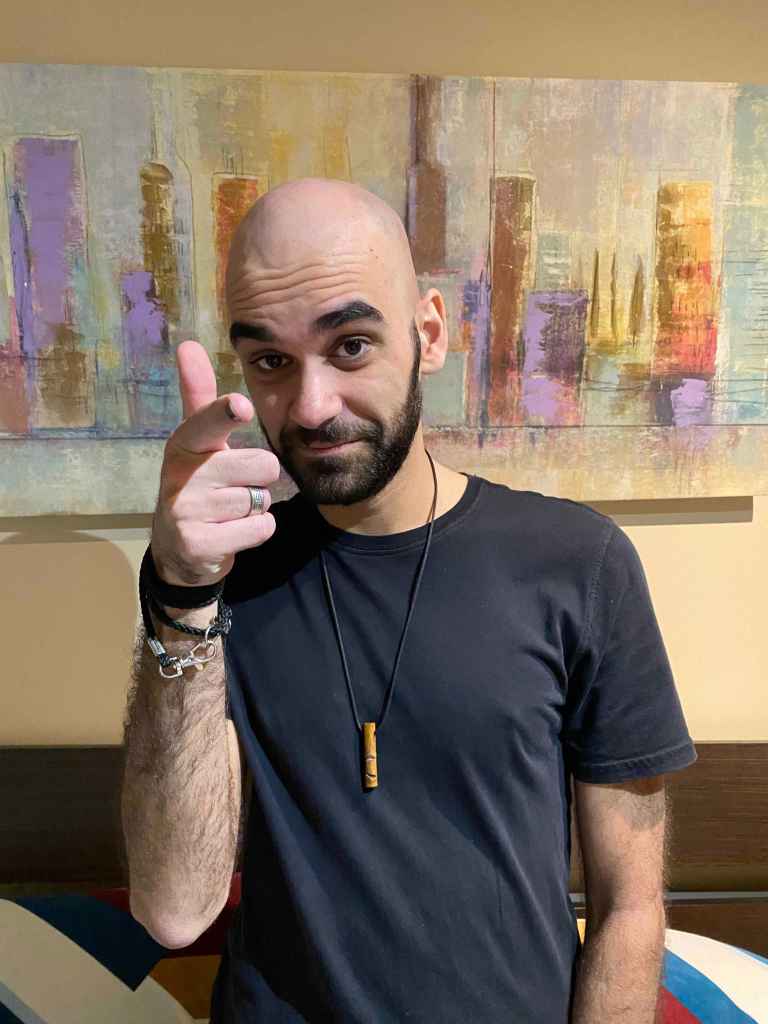
In my work, I review how we might use ideas from string theory to explain our expanding universe by focusing on a special kind of spacetime called de Sitter space, which has a positive curvature and drives cosmic expansion. Classical methods run into trouble because they give the wrong sign for the cosmological constant—the number that tells us how fast the universe expands—and struggle with defining a proper “vacuum” state when the universe is changing over time. To overcome these issues, my work examines how quantum corrections, introduced through special coherent states known as Glauber–Sudarshan states over a supersymmetric version of flat spacetime, can adjust the underlying geometry so that the cosmological constant comes out positive as needed. This review connects high-energy string theory with observable cosmic behavior, offering an intuitive pathway to a consistent, all-energy-scale (UV-complete) description of our universe.
Why and how did you decide to pursue this research as an undergrad?
Before starting this research I had been self-studying quantum field theory, general relativity, and non-abelian gauge theory so that I would have the framework to study problems in quantum gravity. I pursued research in quantum gravity (and hence this research) following research in other subfields because I am morbidly curious as to the reason behind our existence and why anything can exist. The closest analogue to studying this question is through studying our universe’s structure at different scales, and constructing a model which reproduces nature at all of its scales.
How was the publishing and peer review process beneficial to you?
The publishing and peer review process was invaluable because it helped me significantly improve the clarity and accessibility of my writing. The feedback I received from reviewers highlighted areas where I assumed too much technical background from readers, prompting me to refine explanations and better convey complex ideas to a wider audience. Overall, the experience strengthened my scientific communication skills and gave me insight into the standards expected in professional research publications.
What was the biggest challenge you faced conducting this research?
The biggest challenge was translating highly abstract and mathematically intricate concepts from superstring theory into clear explanations that could be understood by non-experts. Balancing mathematical rigor with intuitive accessibility required continuous refinement and careful thought, especially when addressing the complex relationship between quantum corrections and the cosmological constant.
Where have you found support throughout your time doing undergrad research?
My sources of support throughout my time doing research came from my family, my close friends, my colleagues, and finally my supervisor, all of which I am grateful to have their support.
Who is your favourite scientist?
Edward Witten. I believe you are able to explain any topic to a non-expert if you understand it well enough and he is proof of it. Also he is humble, which I believe aligns with the spirit of a physicist.
Asymetry of Pain-Induced Facial Grimmacing
Authors :
Elodie Nickner, Department of Psychology, McGill University

Can you provide a brief summary of the work you submitted to MSURJ and why it is important?
Pain has two main components, sensory-discriminative: the quality, intensity and location of pain, and the motivational-affective: the emotional aversiveness of pain reflective of suffering. Few existing measures capture the more elusive motivational-affective component and those that do are hampered as they are not translatable across species. The Mouse Grimace Scale is one such measure that is thought to capture the motivational-affective of pain, which this paper aims to demonstrate. Capturing the motivational-affective component of pain, reflective of suffering, is crucial as ethical considerations prevent us from inflicting the same type of pain on humans as we can in preclinical models. By capturing this aspect of pain, we are bridging the translatability gap between preclinical and clinical models, offering valuable insights for the treatment of chronic pain and its associated suffering.
Why and how did you decide to pursue this research as an undergrad?
I pursued preclinical chronic pain research under the supervision of renowned researcher Dr. Jeffrey Mogil upon having successfully completed his reputably challenging course PSYC 302: The Psychology of Pain. My exposure to neurochemistry led me to become fascinated by the irony of using drugs to manage chronic pain, only to have them potentially cause additional health complications due to their impact on the brain. The scarcity of knowledge on how drugs impact the brain fascinated me, therefore it stands to reason that pursuing preclinical research would allow me to bridge this critical knowledge gap. Upon successfully completing the course, I applied in Dr. Jeffrey Mogil’s pain lab and began my research journey.
How was the publishing and peer review process beneficial to you?
The publishing and peer review process gave me insight into the academic editorial gauntlet, and urged me to delve into the nitty gritty details of my paper, leaving no stone unturned. I learned to embrace the revision process as a crucial part of refining my work. Each round of feedback, though challenging at times, allowed me to see my research from new perspectives, improving both the clarity and depth of my arguments. I came to appreciate the editorial gauntlet as a process that sharpens ideas, enhances the quality of writing, and strengthens the overall contribution to the field. By navigating this rigorous process, I grew not only as a researcher but also as a writer, learning how to communicate my ideas more effectively and respond to feedback with an open mind.
What was the biggest challenge you faced conducting this research?
The biggest challenge I faced during this research was the long hours and late nights spent in the lab. Preclinical research differs significantly from clinical research, as experiments must adhere to strict timelines that don’t follow a traditional 9-5 schedule. The drugs used in the lab have varying active lifespans, which means sometimes I need to be in the lab earlier or later than I would like. Additionally, preclinical research involves working with rodents, and the responsibility of ensuring their well-being is a heavy one. This aspect of the work is particularly daunting, as it emphasizes the importance of my daily efforts to minimize, and ideally prevent, any losses.
Where have you found support throughout your time doing undergrad research?
The most valuable support network I used throughout my journey conducting undergraduate research stemmed from my esteemed mentor Dr. Alicia Zumbusch is now working as a postdoctoral researcher at Rutgers University. Our professional relationship was forged through effective communication, a healthy balance between strictness and leniency, and most importantly our philosophy of no-stupid-questions. My insatiable curiosity blended with her open arms, fostering a welcoming environment that nurtured my thirst for knowledge in a way that encouraged exploration, creativity, and critical thinking. This dynamic made me feel empowered to ask questions, challenge assumptions, and grow intellectually without the fear of judgment.
Who is your favourite scientist?
Dr. Anna Taylor’s pioneering work in drug development, particularly for pain management, is a profound source of inspiration for me. Her preclinical research is not only advancing medical science but also providing hope for better treatments. As a fellow woman in science, I admire her ability to combine scientific innovation with a deep sense of compassion,and demonstrating that women can lead groundbreaking work in a field where they remain underrepresented.
Assessment of Heart Laterality Defects in Zebrafish to Study Variants of Uncertain Significance in Primary Ciliary
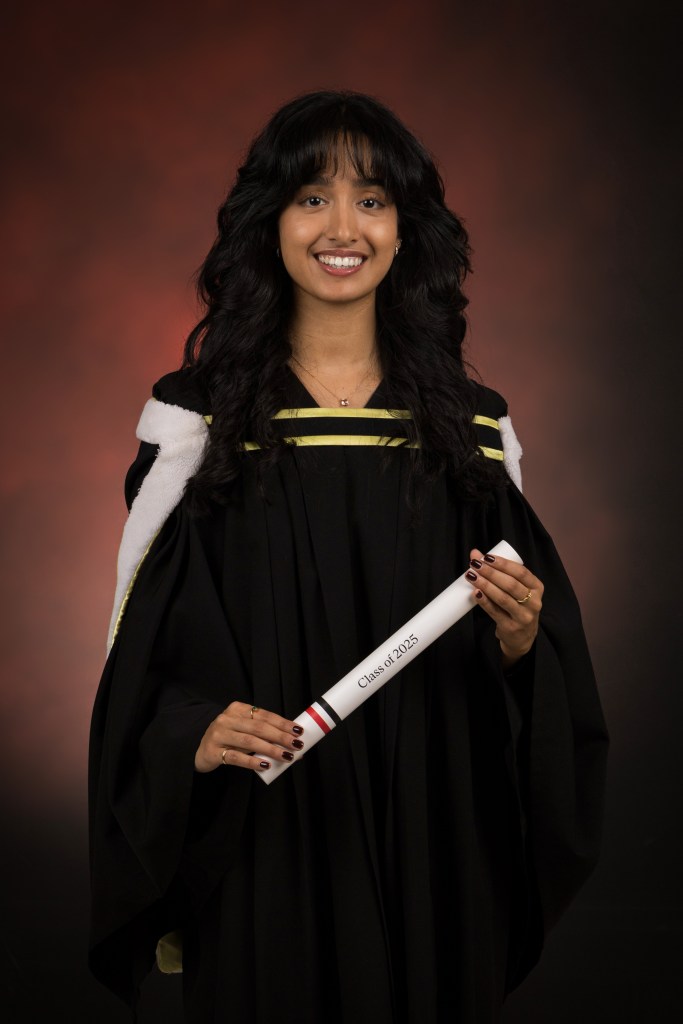
Undergraduate Author: Divya Kakkar, Department of Cell Biology and Anatomy, McGill University
Co-authors: Zachary W. Nurcombe, Lina Mougharbel, Thomas M. Kitzler, Research Institute of the McGill University Health Centre, Department of Human Genetics, McGill University
Can you provide a brief summary of the work you submitted to MSURJ and its importance?
Primary ciliary dyskinesia (PCD) is an inherited disorder that causes motile ciliary dysfunction, leading to respiratory and developmental issues. Despite over 50 genes being linked to PCD, many cases still lack a definitive molecular diagnosis, with genetic testing often revealing variants of uncertain significance (VUS). In my project, I aim to resolve these VUSs by using zebrafish, which have a similar PCD gene called DNAAF1. Through gene knock-down technology, I observed PCD-related developmental defects in zebrafish, such as body curvature, hydrocephalus, and heart-laterality defects. This approach allows me to validate VUSs in human PCD genes, providing a method to enhance genetic diagnoses and deepen our understanding of the molecular mechanisms behind PCD.
Why and how did you decide to pursue this research as an undergrad?
As an undergrad, I developed an interest in genetics and Dr. Kitzler’s work using zebrafish as model organisms to study human disease. I began this research as a summer volunteer and then continued it through the semester as part of my HGEN 396 Undergraduate Research Project.
How was the publishing and peer review process beneficial to you?
I found it incredibly beneficial to experience the process of working with an editor and peer reviewer as an undergraduate. It was eye-opening to understand the amount of work involved in this process, as well as how it helped me improve my writing. Overall, the experience was rewarding, because I saw the hours of my research in the lab culminate into a publication.
What was the biggest challenge you faced conducting this research?
I believe the biggest challenge I faced was time. Research is a lengthy and often unpredictable process, making it difficult to plan effectively while balancing other classes during the semester.
Where have you found support throughout your time doing undergrad research?
I’ve found the greatest support in my fellow peers, who are also working on similar research projects in their respective labs. As an undergrad, research can be challenging; you often feel in the dark, as if you’re alone in your mistakes and shortcomings. It’s been incredibly helpful to relate to my peers, motivate each other, and watch our projects evolve together. Additionally, the support I’ve received from the graduate student I’ve worked with has been invaluable. He has gone above and beyond to teach me skills that will make me a strong researcher one day and ensures I feel supported every step of the way.
Who is your favourite scientist?
My favourite scientist, although biased, has always been my mom. Her dedication and devotion to science, even in the face of challenges, has inspired me my entire life. Her encouragement throughout my studies has always been my driving force, motivating me to find my own path in science.
Neural Complexity and Prognosis: Predicting Recovery in Pediatric Epilepsy using Electroencephalography Markers
Undergraduate Author: Marlo Naish, Faculty of Science at McGill University
Co-authors: Derek Newman, Stefan Clain-Moraes, Integrated Program in Neuroscience, School of Physical and Occupational Therapy McGill University

Can you provide a brief summary of the work you submitted to MSURJ and its importance?
Predicting patient outcomes is a challenge in the pediatric intensive care unit (PICU) with current prognostic methods lacking accessibility and accuracy. Epilepsy is a prominent neurological emergency in the PICU characterized by abnormal electrical brain activity and frequent seizures. We investigated if the neural activity of pediatric patients with epilepsy, specifically the complexity of their brain signals, could predict their recovery. We analyzed Electroencephalography (EEG) recordings from pediatric patients during sedation periods, baseline (no anesthesia) periods, and their difference. Complexity features during sedation periods were highly predictive of patient outcomes, with two complexity features predicting recovery with 100% accuracy. These findings demonstrate that EEG analysis could be an accessible and powerful prognostic tool in the PICU.
Why and how did you decide to pursue this research as an undergrad?
I have been interested in the neuroscience of consciousness for a long time, leading me to connect with a professor in this area of study. While coursework provides a theoretical foundation, I wanted to participate in a project that applies neuroscience to real clinical challenges. I began this project in the summer of 2024 and have continued it throughout the school year. Working with patient data has been a rewarding experience, and I’m grateful for the opportunity to contribute to this research.
How was the publishing and peer review process beneficial to you?
The editing and peer review process helped me see how my paper is understood by a wider audience. It improved the clarity of my writing and encouraged me to think more deeply about each aspect of my research. The feedback I received also provided interesting ideas for future directions for the project!
What was the biggest challenge you faced conducting this research?
The biggest challenges I faced were related to everyday logistics. Downloading data and debugging code often took much more time than the “interesting” parts of the research.
Where have you found support throughout your time doing undergrad research?
I have received incredible support from everyone in the BIAPT lab. Each member has their own specialty, from anesthesiology to machine learning, and has been more than willing to give me advice and support throughout this research. I am incredibly grateful for their help, and I would not have been able to complete this research without them!
Chromosomal Instability (CIN) and CIN-induced Inflammatory Signalling in Human Lymphoma Cells
Author: Veronika Müller, Genomic Instability in Development and Disease, European Institue for the Biology of Aging, University of Groningen
Can you provide a brief summary of the work you submitted to MSURJ and why it is important?
My research focuses on chromosomal instability (CIN) in human lymphoma cells and its connection to IL6-mediated inflammatory signaling. CIN is a hallmark of cancer, contributing to genetic diversity and tumor progression. By investigating how IL6 signaling influences chromosomal instability, the ultimate aim is to do background work that could lead to the discovery of therapeutic targets for lymphoma treatment. Understanding this relationship could lead to novel strategies to limit tumor evolution and improve patient outcomes.
Why and how did you decide to pursue this research as an undergrad?
I have always been fascinated by the molecular mechanisms underlying cancer progression. During my undergraduate studies, I was drawn to the intersection of genetics and immunology. My cell biology class and the immunology lectures captivated me (especially the lectures about inflammatory signaling) and motivated me to join a research lab focused on chromosomal instability.
How was the publishing and peer review process beneficial to you?
The peer review process was honestly both incredibly educational and also humbling. Receiving feedback from experts helped me to refine my work and also to ensure that my findings are clearly communicated. After the research got accepted, I still had to put in a lot of work, which showed me how many details need to be taken into account when publishing a paper. I also gained experience in scientific writing, critical thinking, and responding to constructive criticism. I think these skills will be extremely helpful for my future career in research.
What was the biggest challenge you faced conducting this research?
One of the biggest challenges for me was ensuring clear and proper data analysis and presentation. Chromosomal instability is complex to quantify, and interpreting the results requires a type of statistical analysis and visualization that I had never done before. I had to improve my data analysis skills and my ability to communicate findings effectively. It was definitely a challenge but I also see it as a valuable learning experience.
Where have you found support throughout your time doing undergrad research?
I was lucky to have incredible mentors in my lab who provided guidance and encouraged me during my research. All of the colleagues at the lab as well as my professors at the University College played a crucial role. They offered me advice and support throughout the research process. My friends supported me with their open ears and arms, as well as a lot of fun outside of the lab.
Who is your favourite scientist?
My favorite scientist is Rosalind Franklin. Her pioneering work in X-ray crystallography was crucial to understanding DNA structure, but she was still largely overlooked during her lifetime. What inspires me about Franklin isn’t just her intelligence and scientific achievements but her persistence in a field that often dismissed women. Her story shows how important diverse perspectives in science are and that there is a need for greater recognition of work from underrepresented scientists of all genders and backgrounds. Today’s progress in research depends on inclusivity and diversity, especially in times when some forces try to suppress scientific work that includes marginalized groups. Franklin’s persistence is a reminder that science thrives when it is open to all voices, not just those traditionally in power. Progress is about ensuring that knowledge isn’t shaped by ideology or exclusion but by curiosity and a commitment to truth and evidence.

 The Abstract