
By: Robin Steedman-Braun, Contributing Writer
Memory has long been a central focus of neuroscience and psychology, with extensive research exploring how information is encoded, stored, and received by the brain. For example, when you are learning how to get to a new class at the start of the semester, your brain is encoding sensory details such as landmarks and spatial cues; information that it will then store and retrieve to navigate campus in the future. However, a groundbreaking new study has introduced the possibility that memory processes may also be occurring outside the brain3.
The most common and supported theory on memory suggests the brain replays information repeatedly, forming strong synapses, the connections between neurons that allow them to communicate, between the neurons first involved in the creation of the memory2. While this theory still stands strong, a 2024 study published by Nikolay Kukushin and Thomas Carew in Nature Communication proposes that cells outside the brain may use similar mechanisms and play just as important a role in memory development.
This research project focused on the “massed-spaced effect,” a psychological phenomenon where learning is more effective when spread over time (spaced) rather than conducted all at once (massed)4. Unfortunately for college students, this means that studying slowly but surely is more efficient than cramming the night before a midterm. This well-studied and supported theory was first discovered and established in neural brain cells. However, Kukushin and Carew took this concept one step further by finding evidence that cells outside the brain seem to exhibit very similar signalling pathways as those involved in the massed-spaced effect within brain cells.
By genetically modifying human cell lines from kidney and nervous system tissue to express luciferase, a light-producing protein5, the researchers were able to track cell activation and examine how and when these memory processes occurred in the cells. The cells were treated with two different chemicals: forskolin and TPA. These simulate neural learning behaviour by activating the cell signalling pathways involved in memory formation and repetition. These chemicals were delivered as short bursts, or “pulses,” in a time-controlled manner to mimic the massed-spaced effect. The pulses were either administered in a consecutive series, similar to massed learning, or distributed over time, as in spaced learning. Interestingly, these cells activated more in response to the spaced pulses and stored this learning behaviour memory for over 24 hours–similar to the way neurons consolidate memory in the brain. This experiment went on to show that this memory process is mediated by proteins such as CREB and ERK, which are also involved in neuronal memory signalling in brain cells, further supporting the idea that spaced memory formation might be encoded both within and outside the brain1,3.
Kukushin and Carew plan to expand on these findings. While their experiment challenges the widely held view that memory is reserved to neurons within the brain, we still have much to learn about these memory processes in cells outside the brain. Future studies could conduct the experiment in-vivo with living organisms, rather than in vitro with individual cells. Conducting the research on various other cell types could also provide insight into whether this process is universal or reserved to certain cells. Further research will provide greater understanding of the complexity and specific mechanism of these cell behaviours. While Kukushin and Carew’s findings are only the first step of what is most likely a more intricate and complex process, this discovery contributes to both our understanding of memory and the spaced-massed effect, as well as broader cell functions. This finding could even provide important insight on biological mechanisms that could be crucial to advancements in different healthcare research fields, such as neuroscience, cancer, and drug research.3 For example, Kukushin and Carew hypothesize that further studies of this phenomenon could be used to train cells to serve specific biological functions, such as hormone production, or even to control and stop cancerous cells from dividing. Long-term, it might even play a role in treating mental health issues through advances in therapeutic drug research. This discovery offers valuable insights that could open a whole new field for research on cell learning behaviours beyond the nervous system.
References
1. Dolan, E. (2025, January 1). Neuroscientists just discovered memory processes in non-brain cells. PsyPost. https://www.psypost.org/neuroscientists-just-discovered-memory-processes-in-non-brain-cells/#google_vignette
2. Kennedy MB. Synaptic Signaling in Learning and Memory. Cold Spring Harb Perspect Biol. 2013 Dec 30;8(2):a016824. doi: 10.1101/cshperspect.a016824. PMID: 24379319; PMCID: PMC4743082.
3. Kukushkin, N.V., Carney, R.E., Tabassum, T. et al. The massed-spaced learning effect in non-neural human cells. Nat Commun 15, 9635 (2024). https://doi.org/10.1038/s41467-024-53922-x
4. National Institute of Neurological Disorders and Stroke. (2022, July 25). Space Versus massed Skill learning. National Institutes of Health. https://www.ninds.nih.gov/health-information/clinical-trials/spaced-versus-massed-skill-learning#:~:text=In%20cognitive%20psychology%2C%20practice%20is,to%20each%20other%20(massed)
5. Spergel, D. J., Krüth, U., Shimshek, D. R., Sprengel, R., & Seeburg, P. H. (2001). Using reporter genes to label selected neuronal populations in transgenic mice for gene promoter, anatomical, and physiological studies. Progress in neurobiology, 63(6), 673–686. https://doi.org/10.1016/s0301-0082(00)00038-1
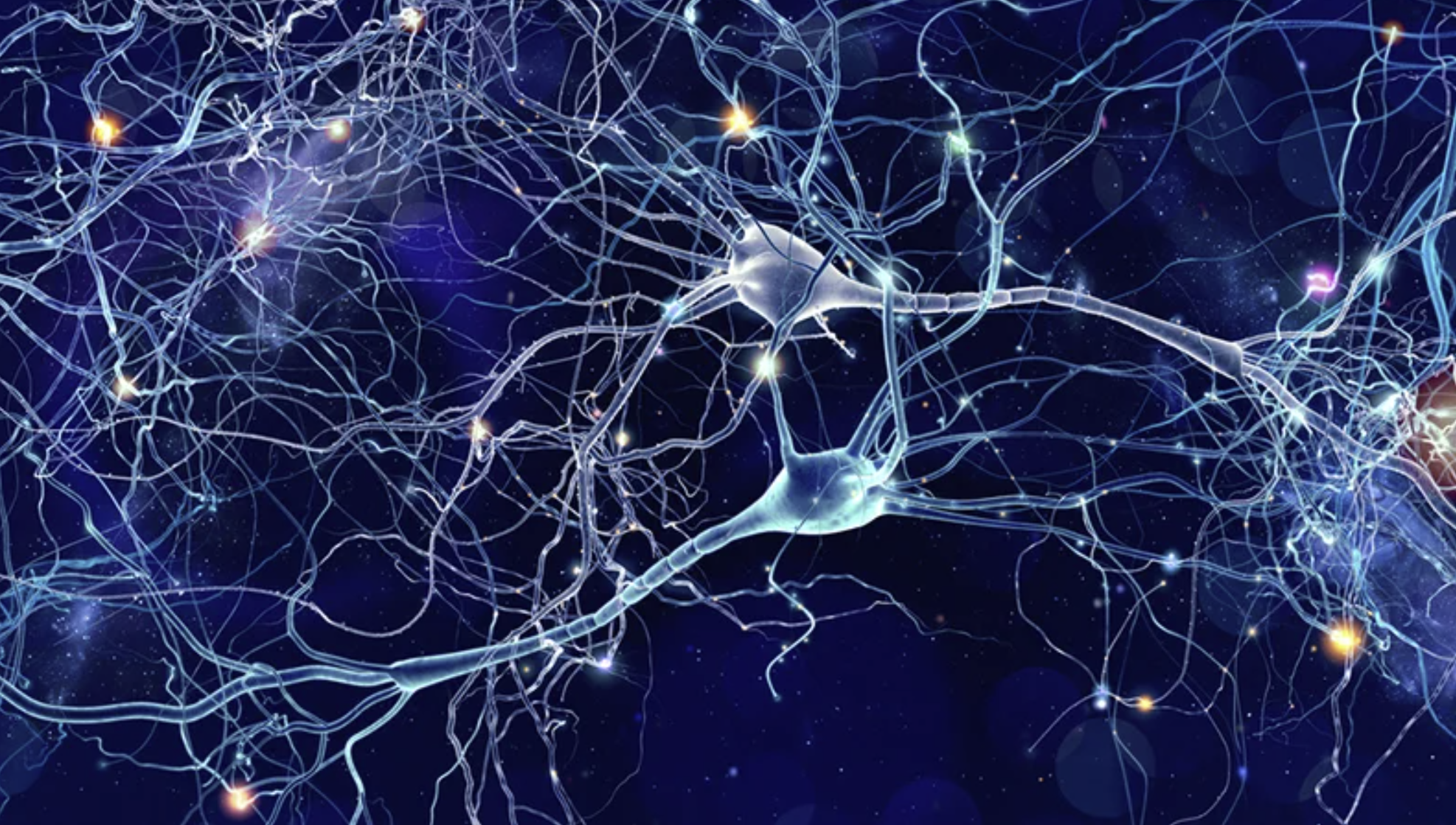
Image source: https://news.uoregon.edu/content/uo-neuroscientists-get-new-view-how-neurons-communicate.

 The Abstract