
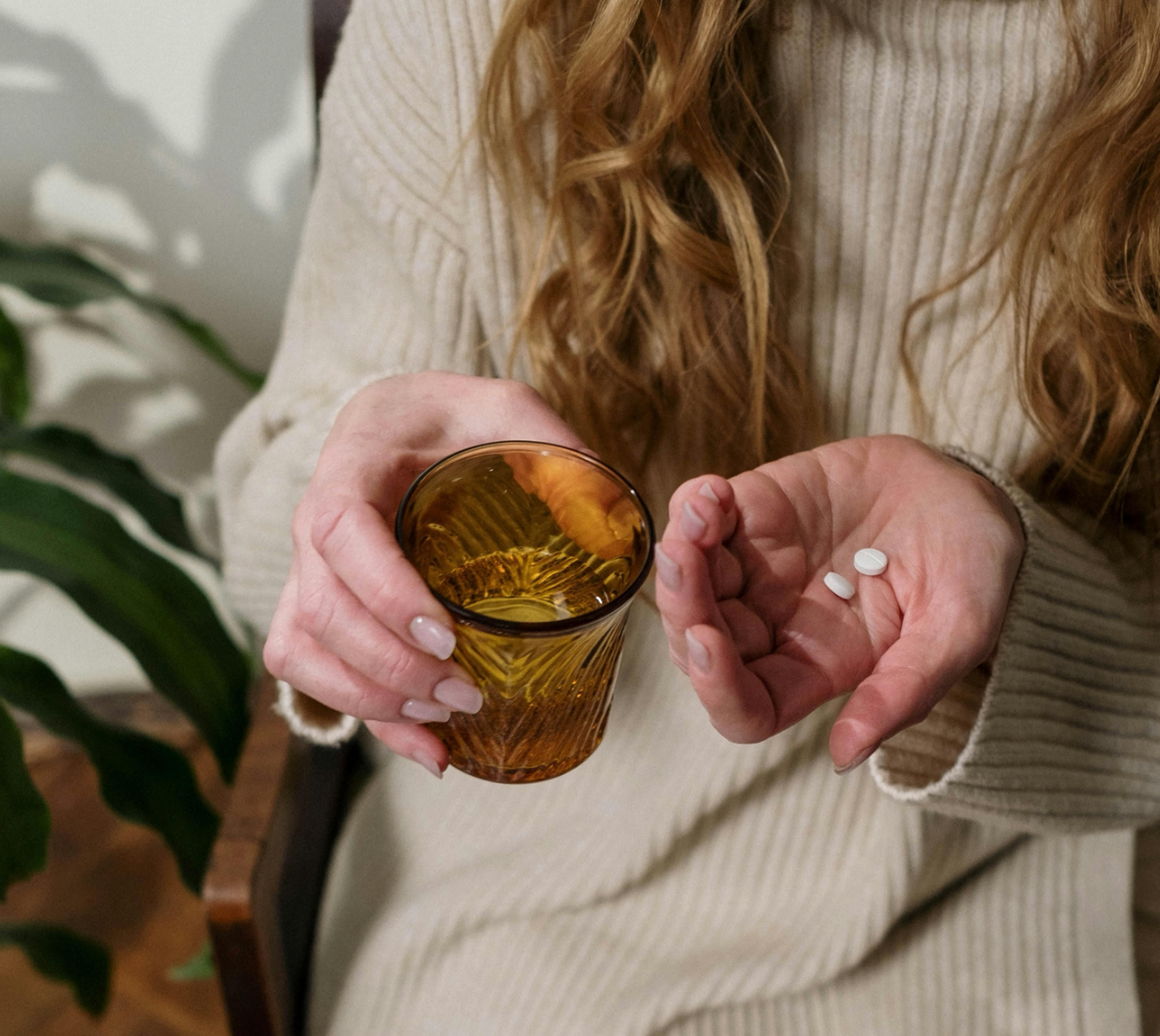
A look into the online marketing, faddish popularity, and (in)efficacy of collagen supplements
By Yolande Hanson, Contributing Writer
Collagen could be described as a “buzzword” of 2023 – appearing everywhere from the packaging of skincare products, to TikTok influencers, and even on bone broths on Gwyneth Paltrow’s blog “Goop” (1). Marketed as a “fountain of youth,” collagen supplements follow in a lineage of related products that purportedly improve skin and hair health such as biotin and omega-3 vitamins.
These products, known under the umbrella term nutraceuticals, are materials derived from food sources in high concentrations that claim additional health benefits in their concentrated form (2). Interest has spiked in nutraceuticals in recent years, with chemicals like collagen being distributed in the form of powders, gummies, coffee creamer, and smoothies, and advertised widely on Instagram, TikTok, and other social media platforms.
The nutraceutical industry is projected to grow 9.4% from its 2022 market value of USD $291.33 billion by 2030 (3). Collagen supplements have seen a massive uptick in the past couple of years – their market value grew a whopping 32% from 2018 to 2019 and is forecasted to continue accelerating at a 5.5% growth rate over the next seven years (4).
Can this massive growth be explained by the actual health benefits consumers experience from supplements? As the digital wellness space rapidly evolves, where exactly does collagen supplementation fit?
Despite the popularity of collagen in the last few years, research results on its effectiveness for skin and bone health and its other reported benefits remain mixed. Just as many articles have highlighted the fact that nutraceuticals often have negligible, and indeed occasional harmful effects, collagen may simply be another arsenal in the wellness marketplace toolkit.
Collagens are protein molecules and are the principal component of the extracellular matrix, which provides the structure for all the cells of your body. Collagen makes up about one third of the total protein in humans, with its most abundant type – Type I – being especially important in maintaining your skin, bones, and cartilage (5). Collagen supplements available on the market are derived from either bovine, porcine, or marine sources, which are then hydrolyzed, or broken down into parts. While it’s hypothesized that this hydrolyzed collagen can travel through the blood after ingestion and exert various biological effects to improve your skin and muscles, definitive evidence for this is lacking (6). As collagens are proteins which are all digested through breaking down into amino acids, its benefits and specific distribution in the body after ingestion have not been shown to differ from any other protein sources, whether ingested through food or supplement form (7).
Much of the research on collagen supplementation has focused on its use for joint and bone health, especially in managing diseases like osteoarthritis and osteoporosis. Several studies have reported improvements in pain management, but it must be pointed out that studies use widely different methods, and often participants take varying combinations and doses of hydrolyzed collagen (8). In addition, many studies use hydrolyzed collagen supplementation in ready-to-consume formulations. This means that the collagen is in combination with a variety of other vitamins, antioxidants, and minerals, making it challenging to ascribe any effects to collagen alone (9). An additional challenge in parsing these studies is the potential for conflicts of interest: several literature reviews have pointed out that the majority of collagen studies have been at least partially or completely funded by the collagen industry (10,11).
The recent explosion of interest in collagen can be perhaps attributed to its presence on social media. Despite most of the research on collagen’s effectiveness occurring on aging joints and skin, marketing choices for the product have instead utilized young, attractive, thin white women as their spokespeople on TikTok, Instagram and Youtube. Products are often insidiously marketed in online content, with young influencers including collagen supplementation in the form of coffee creamer or post-workout shake in the form of popular “What I Eat in a Day” videos (12).
The ubiquity of these products in online spaces can be seen as a phenomenon of what scholar Bridget Conor calls “cosmic wellness” content. This refers to the culture and discourse surrounding wellness in online spaces that is primarily produced by wealthy white influencers (13). While the content surrounding cosmic wellness can be seen as “New Age,” self-absorbed, or silly, it’s undeniable that the cosmic wellness phenomena have generated profound interest and profit for the nutraceutical industry, indeed being perhaps an impetus for its projected growth over the next ten years.
As Conor describes, the supplements and lifestyle put forward by “cosmic wellness” spaces, like collagen, all contribute to a change in our understanding of the polarities of health and illness. This can be seen by the fact that while collagen supplement research largely occurs for the treatment of illness, its marketing is instead aimed at young, healthy individuals. Collagen supplements are thus not used simply to cure or improve disease, but rather to optimize the healthy (14). The market of wellness breaks down the polarity of health versus illness, encouraging the consumer to consume without any sort of medical necessity, and rather for a sort of aspiration towards luxury, beauty, thinness or otherwise non-medical reasons.
Wellness packaged as collagens is by no means a new phenomenon of well-being promotion. All sorts of products have been put forward by the food and nutraceutical industries for decades to encourage consumers to aspire to a higher-state of well-being, often through an ingestible or food-adjacent product (15).
Certainly, individuals may find these products enjoyable and beneficial to consume, and very little adverse effects have been reported from their consumption. While their benefits have hardly been shown to differ from a balanced diet, exercise, and an otherwise healthy lifestyle, their ubiquity on the marketplace and widespread marketing has certainly convinced many of us. It remains to be seen if collagen will maintain its buzziness into 2024 or morph into a similar, collagen-adjacent ingestible for consumers to purchase.
References
- Heller, Lyla. (n.d.) What Drinking Collagen Might do for Your Skin. goop. https://goop.com/ca-en/beauty/skin/what-drinking-collagen-might-do-for-your-skin/.
- Puri, Vivek et al. (2022). A Comprehensive Review on Nutraceuticals: Therapy Support and Formulation Challenges. Nutrients, 14(21), 4637. https://doi.org/10.3390/nu14214637.
- Grand View Research. (2022). Nutraceuticals Market Size, Share & Growth Report, 2023-2030. https://www.grandviewresearch.com/industry-analysis/nutraceuticals-market.
- Grand View Research. (2022). Collagen Supplements Market Size, Share & Growth Report, 2022-2028. https://www.grandviewresearch.com/industry-analysis/collagen-supplement-market-report.
- Campos, Luana Dias et al. (2023). Collagen supplementation in skin and orthopedic diseases : A review of the literature. Heliyon, 9(4), e14961. https://doi.org/10.1016/j.heliyon.2023.e14961.
- Jhawar N, Wang JV, Saedi N. (2020). Oral collagen supplementation for skin aging: A fad or the future? Journal of Cosmetic Dermatology, 19(4): 910–912. https://doi-org.proxy3.library.mcgill.ca/10.1111/jocd.13096
- Ibid.
- Wang H. (2021). A Review of the Effects of Collagen Treatment in Clinical Studies. Polymers, 13(22), 3868. https://doi.org/10.3390/polym13223868.
- Ibid.
- Campos, Luana Dias et al. (2023). Collagen supplementation in skin and orthopedic diseases : A review of the literature. Heliyon, 9(4), e14961. https://doi.org/10.1016/j.heliyon.2023.e14961.
- Rustad, A.M.; Nickles, M.A.; McKenney, J.; Bilimoria, S.; & Lio, P.A. (2022). Myths and media in oral collagen supplementation for the skin, nails, and hair: A review. Journal of Cosmetic Dermatology, 21(2): 438–443. https://doi-org.proxy3.library.mcgill.ca/10.1111/jocd.14567.
- Ibid.
- Conor, B. (2021). ‘How Goopy are you?’ Women, Goop and cosmic wellness. European Journal of Cultural Studies, 24(6), 1261–1281. https://doi.org/10.1177/13675494211055735.
- Ibid.
- Ibid.
Image source: https://www.cosmacon.de/en/collagen/

 The Abstract