
By Audrey-Anne Beaudry, Contributing Writer
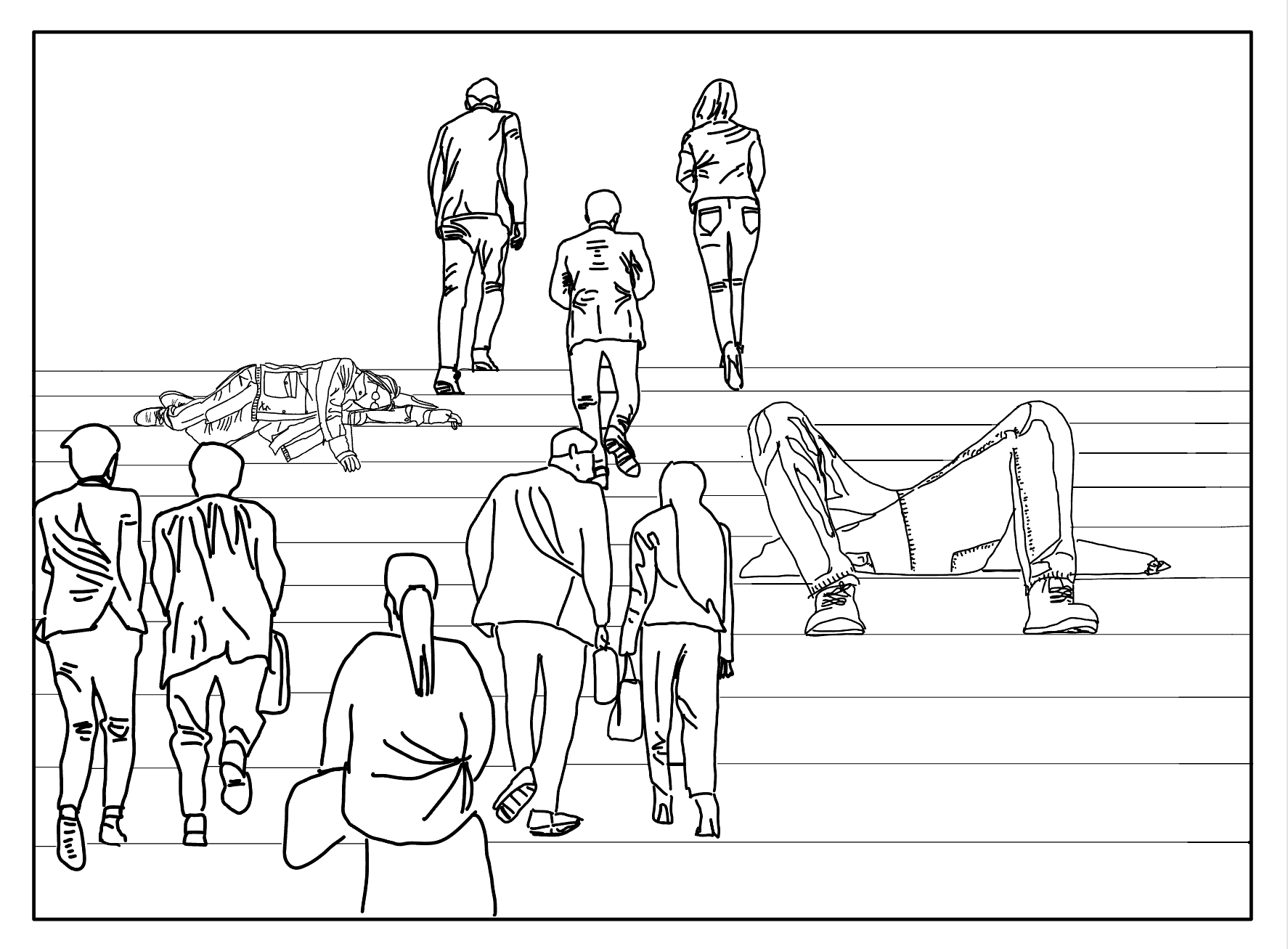
Drawing by Audrey-Anne Beaudry
Sleep inequality has been and continues to be neglected. But, what exactly is sleep inequality? It is an extensive and cyclical problem in which racial and ethnic disparities in sleep exacerbate overall health and wellness. Let’s take a closer look:
Sleep inequality can be manifested by sleep problems and sleep deprivation. Sleep problems involve the quality, timing, and quantity of sleep, which results in daytime distress and impairment in functioning (1). Sleep deprivation, in turn, consists either in a complete lack of sleep or a shorter-than optimal sleep time (2).
Sleep inequality is a form of social inequality, and we aim to limit the effects of sleep inequality in the future, by studying their manifestations and effects. This article will first survey sleep problems and sleep deprivation of minorities, then demonstrate the link between poor sleep quality and mortality, to finally explain the likely causes of sleep inequality.
___________________________
Still now, people of color take longer to fall asleep, have more disturbed sleep, have less deep sleep, and have more sleep disorders. Many minorities report sleeping less than 6 hours, while white people report the more recommended 7 to 9 hours of sleep (3). In San Diego, people of color sleep on an average of 5.9 hours and the sleep is 79% efficient compared to an average of 6.3 hours of 83% efficiency for white men. (4).
Sleep architecture is also affected. Tomfohr et al. measured that African-Americans spend 4.7% less time in slow-wave sleep (SWS) than Caucasian-Americans. This study coordinated the result with increased discrimination in African-Americans (5). SWS is essential for the feeling of wakefulness after sleep.
Another study showed white populations (19.3%) that slept less than 6 hours in the U.S. were a lot less likely than other nationalities (Black: 43%, Hispanic: 31.5%, Chinese American: 37.1%) (6). Caraballo-Cordovez evaluated the differences in sleep duration among racial and ethnic groups by age. Disparities in young and middle-aged Black adults were more pronounced than among older adults. “This suggests that factors related to working or employment conditions are disproportionately preventing Black individuals from having adequate sleep,” said Caraballo-Cordovez (7). These statistics prove that sleep inequality is a real problem that requires the public’s attention.
___________________________
Researchers have proved the link between poor sleep quality and mortality. A lack of sleep quality and quantity can result in mental health problems and contribute to conditions like obesity, diabetes, immune system dysfunction, hypertension, coronary heart disease, and stroke (8). In addition, sleep disorders and disruption can enhance neurodegeneration; this can be linked with personality disorders, Alzheimer’s disease, multiple systems atrophy, dementia with Lewy bodies, frontotemporal degeneration, Huntington’s disease, and many more (9). In sum, chronic sleep deprivation reduces physical and mental health.
Social inequalities enhance the extensive health problems stemming from poor sleep in racial and ethnic minorities. These inequalities stem from socioeconomic and environmental factors. Examples of social factors that can cause acculturative stress (associated with being an immigrant or ethnic minority and going through the acculturation process) include racial discrimination, unfair treatment, safety concerns, and immigration status (10).
Furthermore, working non-traditional hours, like night shifts, is twice as likely for Black and Hispanic people (11). It has been proven that working non-traditional hours like shift work can lead to sleep problems, and thus obesity, diabetes, psychological problems, heart disease and cancer (12). In addition, if people of color have sleep problems, they are less likely to receive medical professional help because of a lack of availability of insurance, of communication and cultural sensitivity, and of availability of health care providers (13).
___________________________
Some additional environmental factors – such as light pollution, air pollution, night-time noise exposure, and nightly ambient light – tend to be more pronounced in locations with a larger ethnic minority population. These factors are a hazard to human health. Nadybal et al. proved the presence of disparities in light pollution based on racial and ethnic minorities and low-to-mid socioeconomic status in the United-States. Americans of Asian, Hispanic, or Black ethnicity had population-weighted mean exposures to light pollution around two times that of White Americans (14).
Nightly light exposure causes circadian inequity (14). The circadian phase is synchronized by light exposure by an internal clock localized in the suprachiasmatic nucleus (SCN) in the hypothalamus which coordinates our sleep cycle. The SCN is synchronized by cues like light, food, noise, activity-rest patterns, and social cues. Light, more specifically, inhibits the pineal gland’s production of the sleep hormone melatonin while darkness stimulates it. Essentially, light alters the intrinsic patterns that establish our sleep by causing awakeness (15). Blue light, notably from fluorescent streetlights, has an 80% melatonin suppression effect, meaning that these lights send lots of wakefulness signals to our hypothalamus. On the other hand, a candle only has about a 2% melatonin suppression effect ; an incandescent light only has a 40% melatonin suppression effect (16).
Cities usually use many of these blue-light streetlights in lower socioeconomic status environments as they are cheaper and as they illuminate well in efforts to keep street crime down (17). However, they cause circadian misalignment and sleep problems as they lower melatonin concentration. A person’s postal code should not in any case be more responsible for their poor health than their genetic code.
___________________________
This is an ongoing field of research. It should be a national health priority; however, the public is mostly in the dark about sleep inequality. In the “Key Health Inequalities in Canada: A National Portrait,” a 437-page government report, sleep inequality was not mentioned (18). Scientists themselves often do not clearly understand how sleep, SES, ethnicity, and health correlate.
Sleep inequity is a vicious cycle as it is both a consequence, and a cause of minorities’ health problems. Shedding light on these phenomenons could help stimulate better sleep education, inspire research to find solutions, and encourage political and social reforms for sleep equality. It would also be relevant to further evaluate why persons of low socioeconomic status are more prone to sleep problems.
This could help us find solutions to address the factors affecting sleep deprivation. If sleep is targeted as a health problem, we could diminish medical problems among racial and ethnic minorities. As Jean-Louis First questioned: why do we have these inequalities? “Is it a function of health care access? Is it a function of lifestyle factors?” (19). Our health varies because of a long list of factors. Sleep inequality should not stay on that list any longer. Our flawed discriminatory system should not condemn some of us because of a genetic and postal lottery.
References
- What are sleep disorders?. Psychiatry.org – What are Sleep Disorders? (n.d.). https://www.psychiatry.org/patients-families/sleep-disorders/what-are-sleep-disorders#:~:text=There%20are%20several%20different%20types,both%20physical%20and%20emotional%20problems
- Orzeł-Gryglewska, J. (2010). Consequences of sleep deprivation. International journal of occupational medicine and environmental health, 23(1), 95-114.
- Chen, X., Wang, R., Zee, P., Lutsey, P. L., Javaheri, S., Alcántara, C., Jackson, C. L., Williams, M. A., & Redline, S. (2015). Racial/Ethnic Differences in Sleep Disturbances: The Multi-Ethnic Study of Atherosclerosis (MESA). Sleep, 38(6), 877–888. https://doi.org/10.5665/sleep.4732
- Grandner, M. A., Williams, N. J., Knutson, K. L., Roberts, D., & Jean-Louis, G. (2016). Sleep disparity, race/ethnicity, and socioeconomic position. Sleep medicine, 18, 7–18. https://doi.org/10.1016/j.sleep.2015.01.020
- Tomfohr, L., Pung, M. A., Edwards, K. M., & Dimsdale, J. E. (2012). Racial differences in sleep architecture: the role of ethnic discrimination. Biological psychology, 89(1), 34–38. https://doi.org/10.1016/j.biopsycho.2011.09.002
- Williams, N. J., Grandner, M. A., Snipes, S. A., Rogers, A., Williams, O., Airhihenbuwa, C., & Jean-Louis, G. (2015). Racial/ethnic disparities in sleep health and health care: importance of the sociocultural context. Sleep health, 1(1), 28-35.
- Reitman, E. (2022). Yale study finds persistent racial and ethnic disparities in sleep duration. Yale News. https://news.yale.edu/2022/04/07/yale-study-finds-persistent-racial-and-ethnic-disparities-sleep-duration
- Del Brutto, O. H., Mera, R. M., Rumbea, D. A., Sedler, M. J., & Castillo, P. R. (2023). Poor sleep quality increases mortality risk: A population-based longitudinal prospective study in community-dwelling middle-aged and older adults. Sleep Health.
- Shen, Y., Lv, Q. K., Xie, W. Y., Gong, S. Y., Zhuang, S., Liu, J. Y., … & Liu, C. F. (2023). Circadian disruption and sleep disorders in neurodegeneration. Translational Neurodegeneration, 12(1), 8.
- Berry, J. W., Kim, U., Minde, T., & Mok, D. (1987). Comparative studies of acculturative stress. International migration review, 21(3), 491-511.
- Shriane, A. E., Ferguson, S. A., Jay, S. M., & Vincent, G. E. (2020). Sleep hygiene in shift workers: a systematic literature review. Sleep Medicine Reviews, 53, 101336.
- Tucker, P., & Folkard, S. (2012). Working time, health and safety: a research synthesis paper.
- Majette, G. R. (2003). Access to health care: what a difference shades of color make. Annals Health L., 12, 121.
- Nadybal, S. M., Collins, T. W., & Grineski, S. E. (2020). Light pollution inequities in the continental United States: A distributive environmental justice analysis. Environmental research, 189, 109959.
- Gillette, M. U., & McArthur, A. J. (1995). Circadian actions of melatonin at the suprachiasmatic nucleus. Behavioural brain research, 73(1-2), 135-139.
- Jou, J., Hsieh, C. (2013). Candlelight-style organic LEDs: a safe lighting source after dusk. Spie.https://healthshift.blog/what-is-blue-light-and-why-is-it-harmful/
- Shimbun, Y. (2008). Blue streetlights believed to prevent suicides, street crime. The Seattle Times.
- Public Health Agency of Canada. (2018). Key health inequalities in Canada: A national portrait. Government of Canada.
- Pérez Ortega R. (2021). Divided we sleep. Science (New York, N.Y.), 374(6567), 552–555. https://doi.org/10.1126/science.acx9445

 The Abstract