
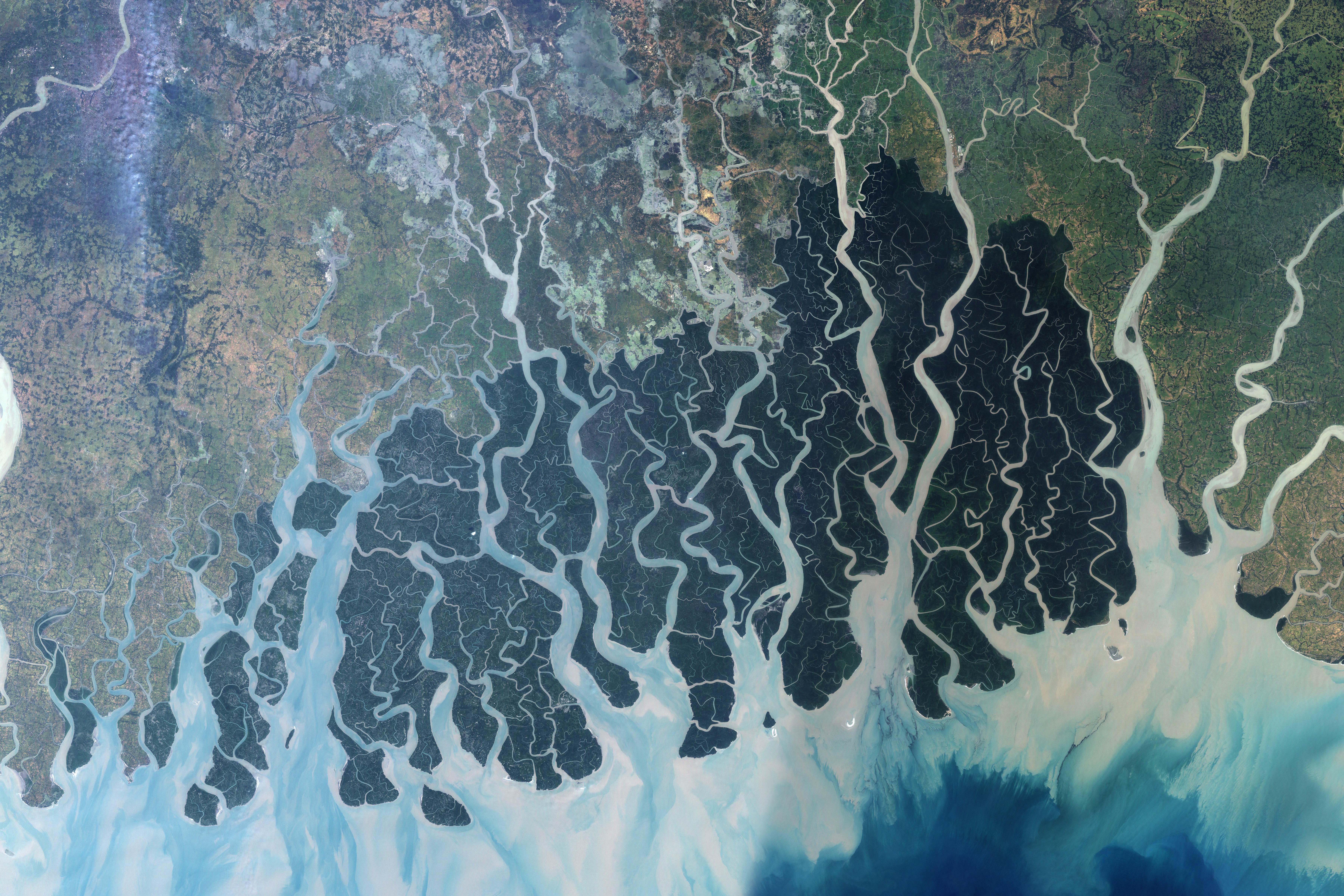
Mangrove forests are on the decline, yet they are precious havens for many endangered species. The largest remaining mangrove forest in the world – the Sundarbans of Bangladesh (with parts in India) – is home to a variety of species, including the endangered Bengal tiger, sharks, and dolphins. Despite the overpopulation of surrounding areas, this area has been protected as a National Park by both Bangladesh and India for nearly two decades.
In the above satellite picture, the mangrove forest shows up as dark green. The lighter green agricultural lands are clearly visible, underscoring the sharp divide between man and nature.
There is increasing pressure on the fragile ecosystem of the Sundarbans from shrimping in the surrounding ponds and the noise and pollution of human settlements. Even deforestation in the far-off Himalayan mountains is affecting the Subdarbans. Despite these pressures, the mangrove forest still remains as an example of how ecosystems can be protected by those who live around them.
Find out more on NASA’s website.

 The Abstract